
When ChatGPT launched on November 30, 2022, it changed everything. Suddenly, the vision of a business solving complex problems simply by communicating with an autonomous agent system felt within reach. This excitement has set off a corporate gold rush, with leaders feeling intense pressure to be AI-first.
However, successful AI implementation requires more than just enthusiasm. In the rush to innovate, corporate leaders are ignoring a critical question:
Are we building sophisticated, expensive AI systems to solve problems that could have been handled by a simple script? Or worse yet, are we automating processes that shouldn't be touched by machines at all?
Let's find out by stripping away the marketing fluff and examining when AI actually makes sense.
Hype vs reality
To understand where to invest, we first have to distinguish between the AI in the movies and the AI currently in production.
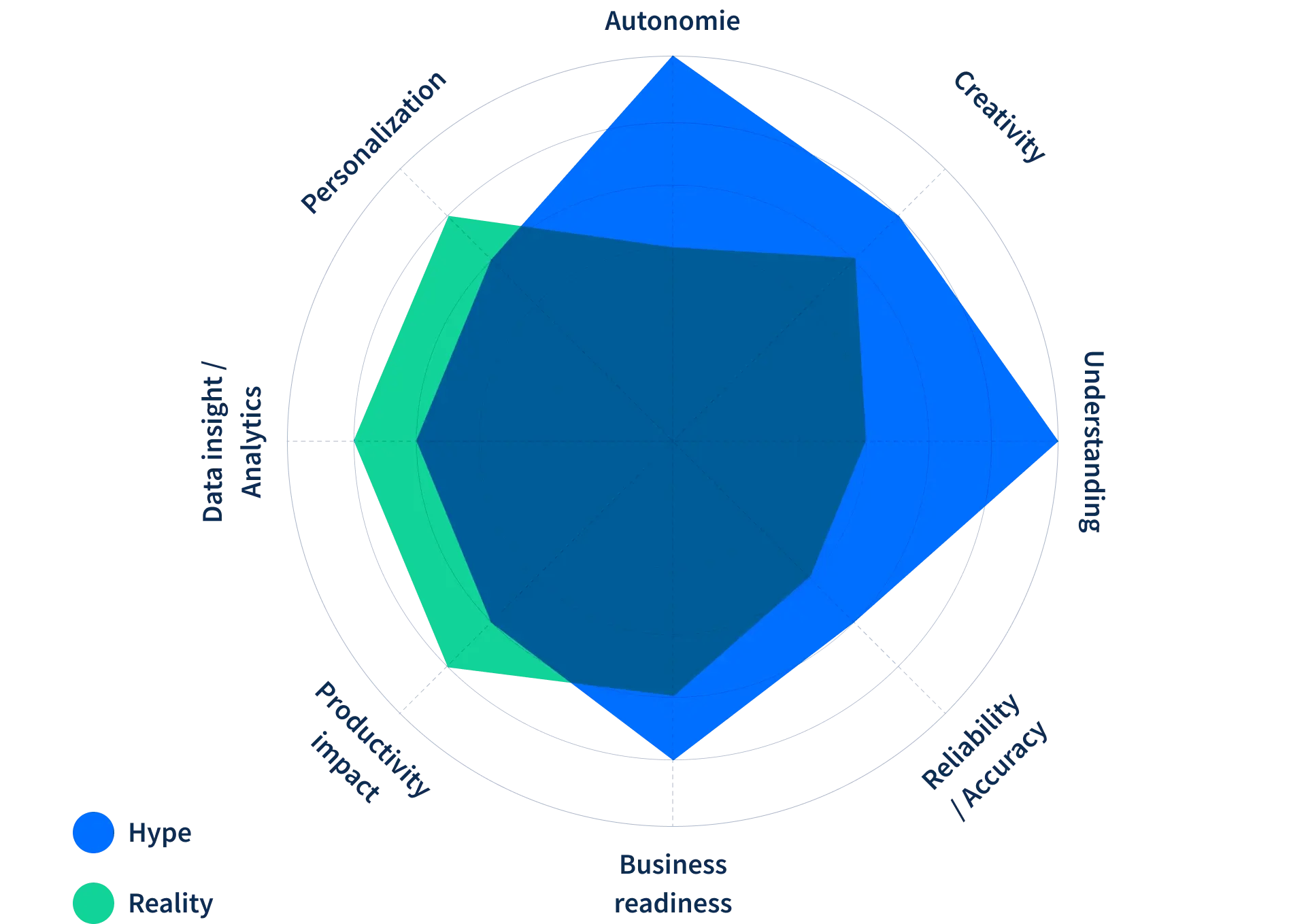
| Hype | Reality |
| Fully autonomous: Set it and forget it. | Human-in-the-loop: Requires oversight and validation. |
| Creative: Generates brand new ideas. | Remixer: Predicts and reshapes existing data. |
| Understanding: Grasps why things happen. | Predictive: Guesses the next token without true comprehension. |
| Production-ready: Works accurately and perfectly out of the box. | Vulnerable: Prone to hallucinations when lacking strong governance and data maturity. |
Even though the dream of total autonomy is what makes headlines, the real underrated value is in enhanced productivity.
I've seen my own data engineers save 40% of their time just by using Copilot for their data flows. This isn't magic. It's the result of mature predictive models handling the heavy lifting of coding and debugging so humans can focus on strategy.
When you need AI agents (and when you don’t)
One of the most expensive mistakes a business can make is spending money to implement an AI agent for a task that a standard API can do for free. Here is the framework for deciding:
When to use AI agents
- Complex reasoning is needed when the workflow isn't a straight line. If the system needs to choose the best route or decide which tool to use based on a customer's specific context, you need an agent.
- Dynamic decision-making becomes essential when rules change too fast for static code. If the environment is fluid, an agent's ability to adapt in real-time creates a massive competitive advantage.
When to stick to traditional automation
- Fixed calculations like tax reductions or insurance premiums should stay as backend APIs. If the task is purely mathematical, using AI is a waste of money.
- Simple data movement doesn't require intelligence. If Step A always leads to Step B, use a script. You don't need a brain to move data from one folder to another.
- Judgment-heavy workflows that rely on human intuition, empathy, or relationships shouldn't be automated. AI cannot replace the trust factor.
Bridging the gap with MCP
The biggest hurdle in implementing AI isn't intelligence, it's connectivity. Currently, connecting agents to tools (APIs, databases, file systems) creates an M x N Problem, where every new model and tool combination requires a brittle, custom-coded integration.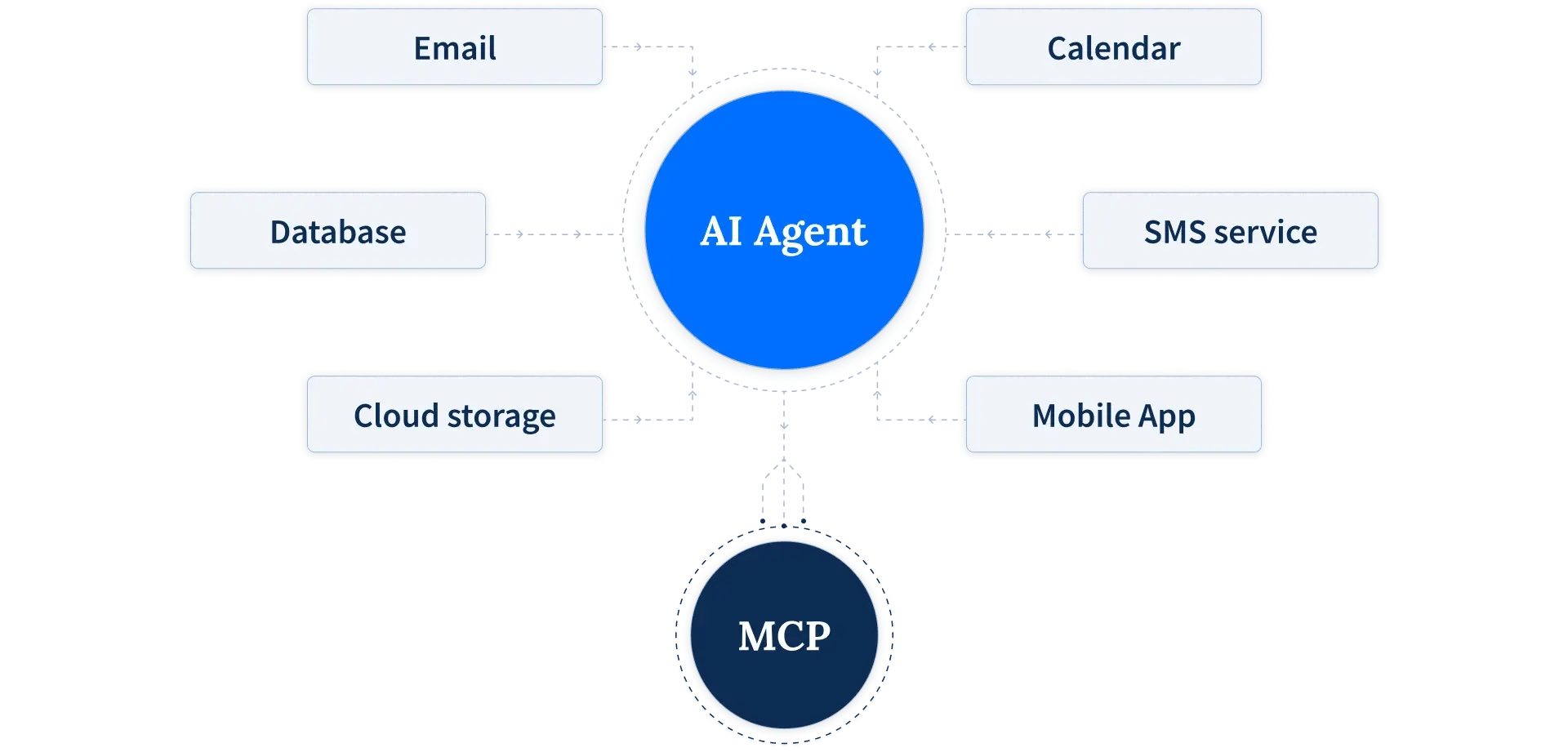
- The universal standard eliminates the need for custom engineering. MCP provides a single standard to connect LLMs to any app or data source, removing the need for custom-coded integrations for every link.
- Behavioral adaptation replaces hard-coded endpoints. Traditional APIs require developers to hard-code every endpoint. MCP enables agents to autonomously decide which tools to use based on real-time context.
- Standardized context and state keep agents on track. For an agent to be effective, it must remember goals and preferences across multiple steps. MCP standardizes this persistent context, ensuring the agent doesn't lose track of its mission.
- Intelligent wrapping elevates existing APIs. MCP doesn't replace your existing APIs. It acts as an intelligent wrapper. While APIs remain the functional layer, MCP translates that functionality into a language AI can reason with.
This results in true contextual intelligence. Instead of a bot that just follows a script, an MCP-enabled agent can check your CRM, notice a client is ignoring emails, and autonomously decide to pivot to an SMS, all because it has a universal connector to the full business picture.
Avoid giving away the "keys to the kingdom"
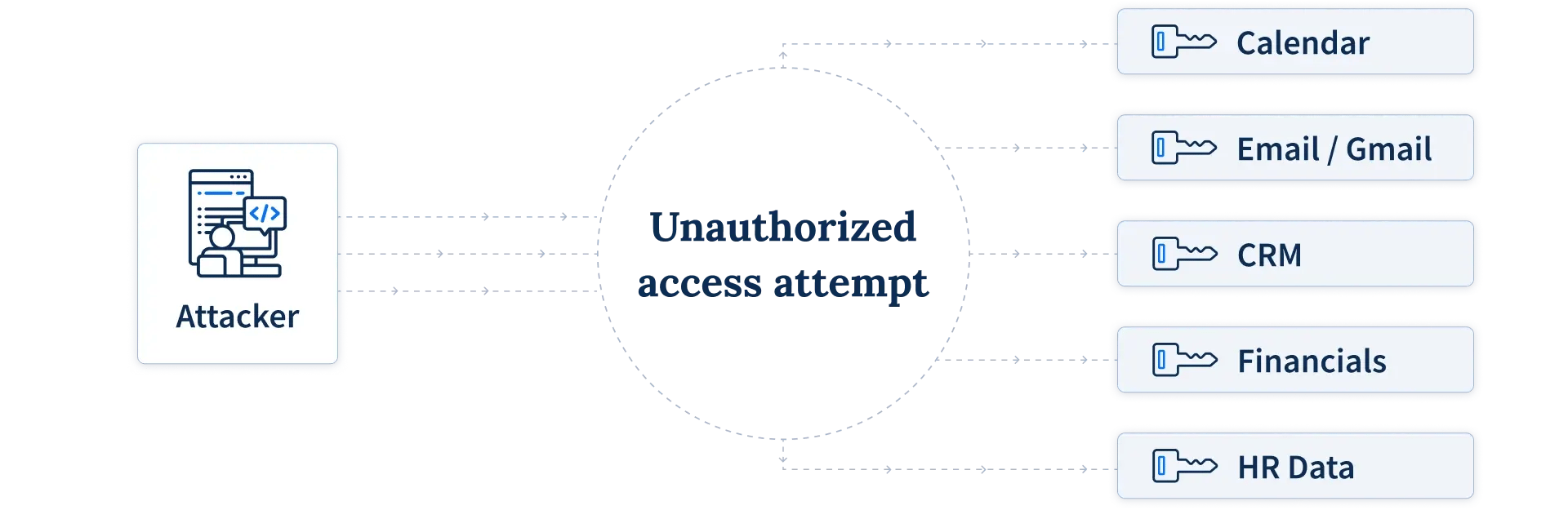
With great connectivity comes great risk. These are the main pitfalls:
- Security hazards can lead to catastrophic outcomes. Prompt injection can trick an agent into bypassing security tokens. If an agent has the power to mass-delete data, it becomes a disaster waiting to happen.
- Operational overload slows agents down and causes errors. Giving an agent too many tools makes it slow and prone to mistakes. Furthermore, the lack of visibility makes it difficult to trace why an agent made a specific (and perhaps wrong) decision.
- Maintenance burden increases with AI complexity. AI systems are inherently more brittle than traditional code because they depend on external models and shifting data. The maintenance overhead is real.
Start small

The path to successful AI implementation isn't a big bang launch. Don’t launch random AI initiatives. Start with small, manageable workflows that have clear outcomes. Prove the performance, establish your governance and security protocols, and then scale to complex, multi-agent systems.
At Seven Peaks, we help you cut through the noise to build AI architecture that actually connects to your business goals. Whether you're looking to set up MCP-standardized agents or optimize your data foundation for AI readiness, our team of AI experts is ready to turn your AI strategy into a production-ready reality.
Damien Velly
VP of Data and AI at Seven Peaks
Damien brings over two decades of experience in the data and analytics field. He now leads the company's strategy, capabilities, and solutions for Data and AI.